Southwest Airlines
Designing the Passenger Boarding Experience
Design a Passenger movement and Operational workflow to help passengers enplane and deplane faster.
Built and shipped a full-sized digital/physical airport for customer testing. Created multi-modal service touch points and tested via phased pilots.
✱ End to End Service Design
✱ Front-End Innovation via stakeholder shadowing culminating in experiential prototype.
Brief
Design a passenger boarding experience workflow that saves time while adding delight
Results
✱ Interventions launched in Southwest’s Daily Operations
✱ Gained 3 minutes of critical “turn time” per customer, resulting in significant OPEX savings.
Project Scope
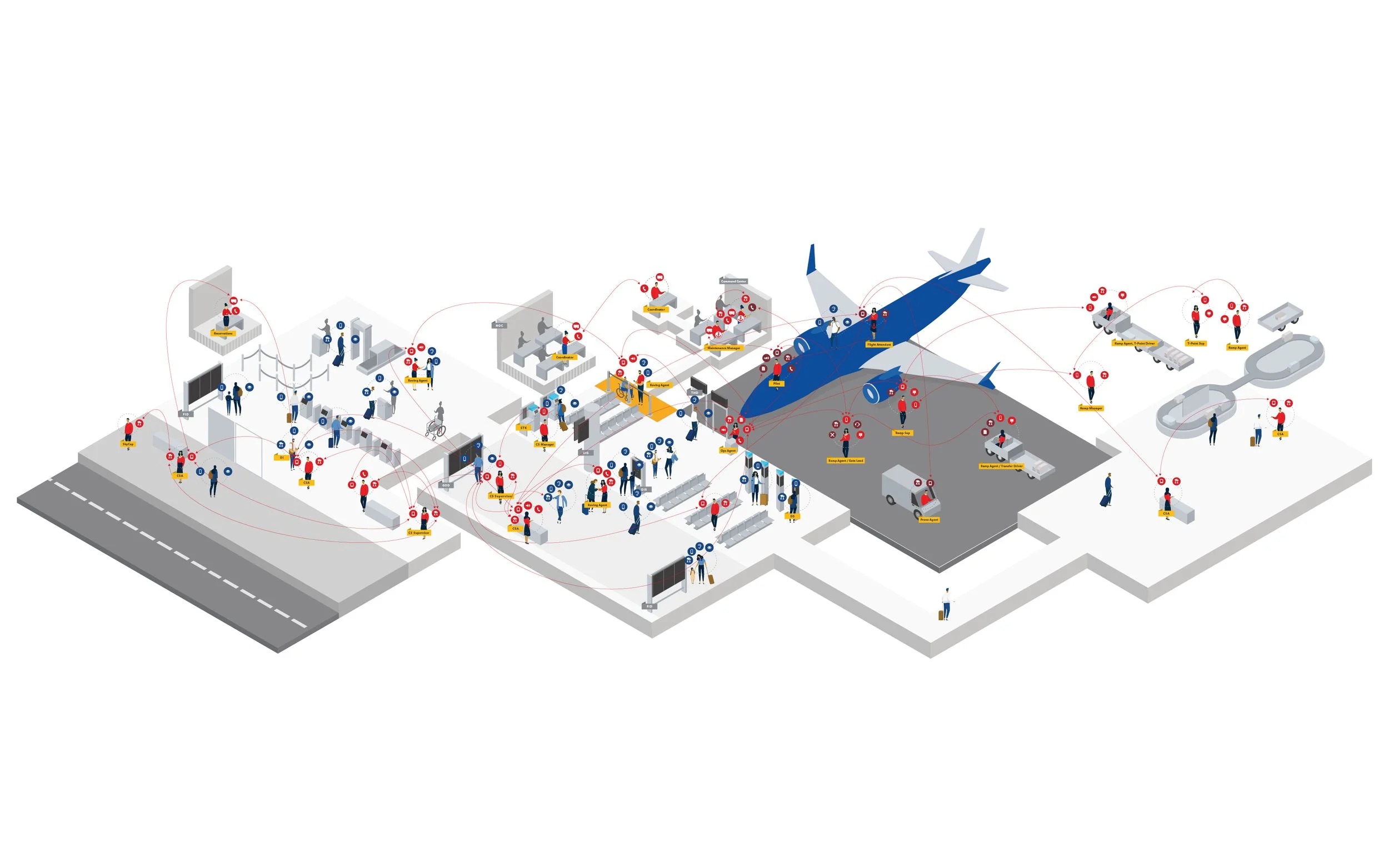
✱ Full Service Design scope including shadowing, human factors analysis, current state mapping, partner ideation, envisioning and full, future state service prototype
✱ Role: Research, Service Mapping, Ideation, Prototyping (physical and digital), Client Relations
The Opportunity
Reduce boarding and deplaning time by 3 minutes per passenger, per flight, unlocking significant operational cost savings while increasing passenger engagement and perceived ease of travel.
The Impact
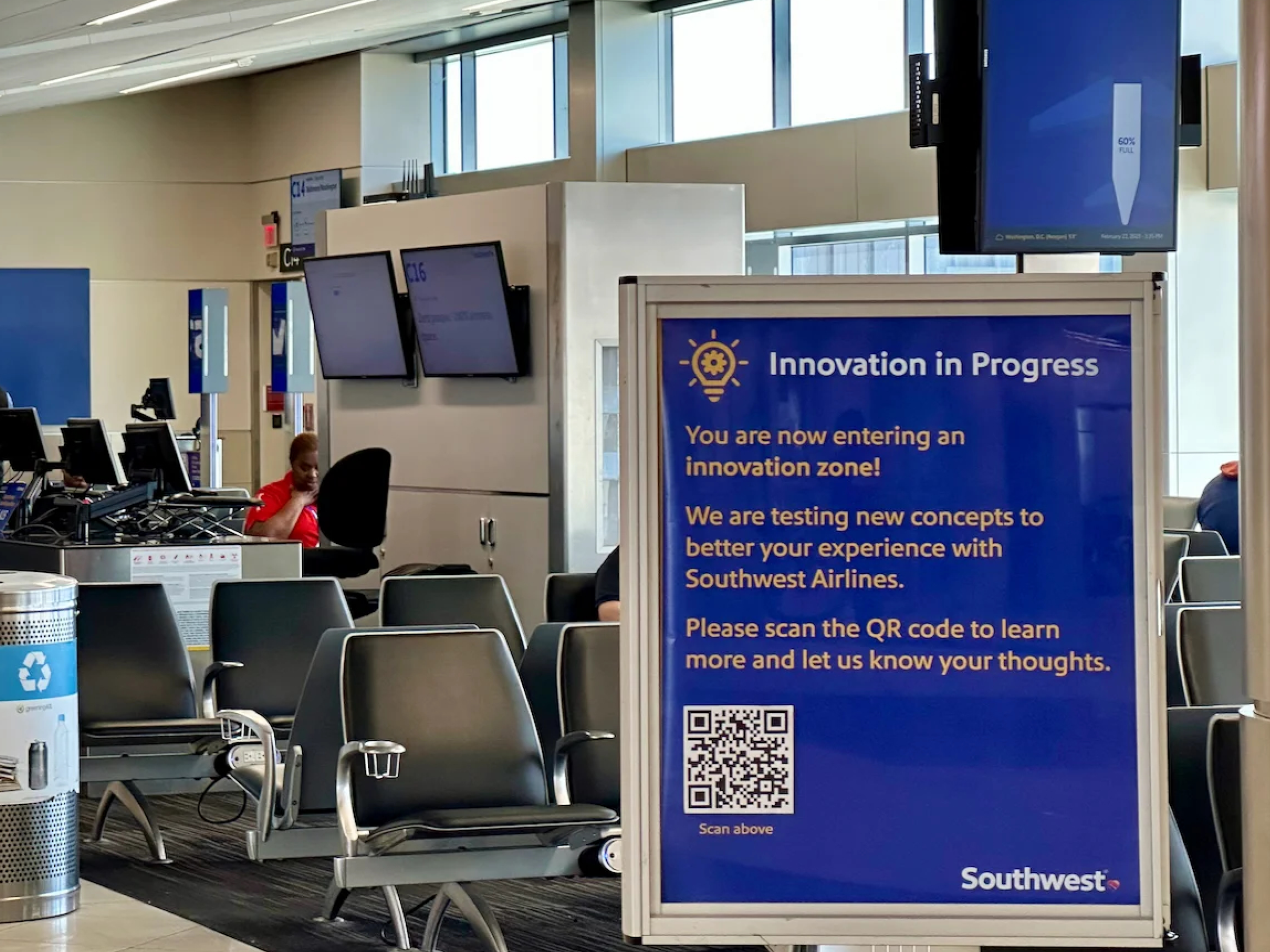
A live service design prototype was deployed at Denver and Dallas Love Field airports, tested with real passengers on active flights, and integrated into Southwest’s core business strategy.
Learning Approach
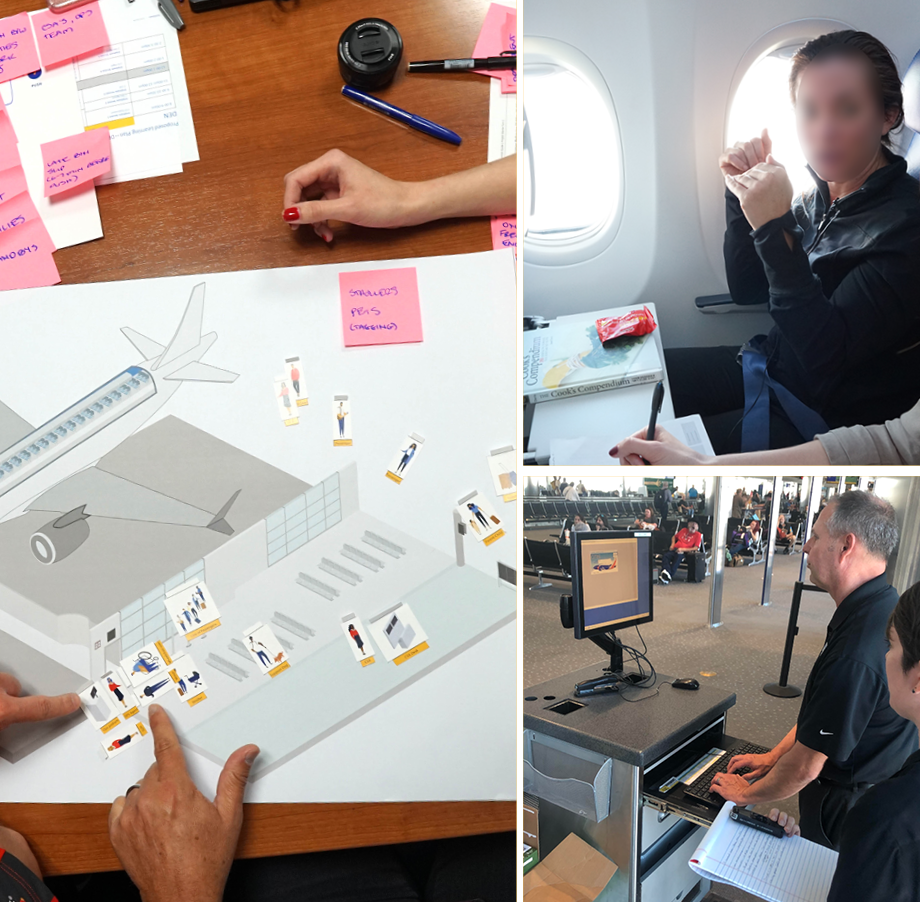
The first step to understand the complex systems of boarding and deplaning were to shadow airline employees (ground crew, ops agents, flight attendants), and also ride-along with passengers to dissect what makes for a joyful passenger experience or a stressful one.
Additionally, interactive illustrations of the experience were used to fill in gaps not observed in shadowing.
Improving boarding and deplaning required a coordinated ecosystem of solutions. The opportunity areas highlight where design could create the most impact.
Aligned Decision Making
HOW MIGHT WE...
Encourage behaviors that align Customers and Employees behind a common goal.
Relevant Information
HOW MIGHT WE...
Engage Customers with clear information, at the right time, on the right channel.
Universal Access
HOW MIGHT WE...
Design a space and process that is
accessible to all levels of ability.
Increased Energy
HOW MIGHT WE...
Foster an energizing atmosphere
at strategic moments during the Turn
Cross Functional Ideation
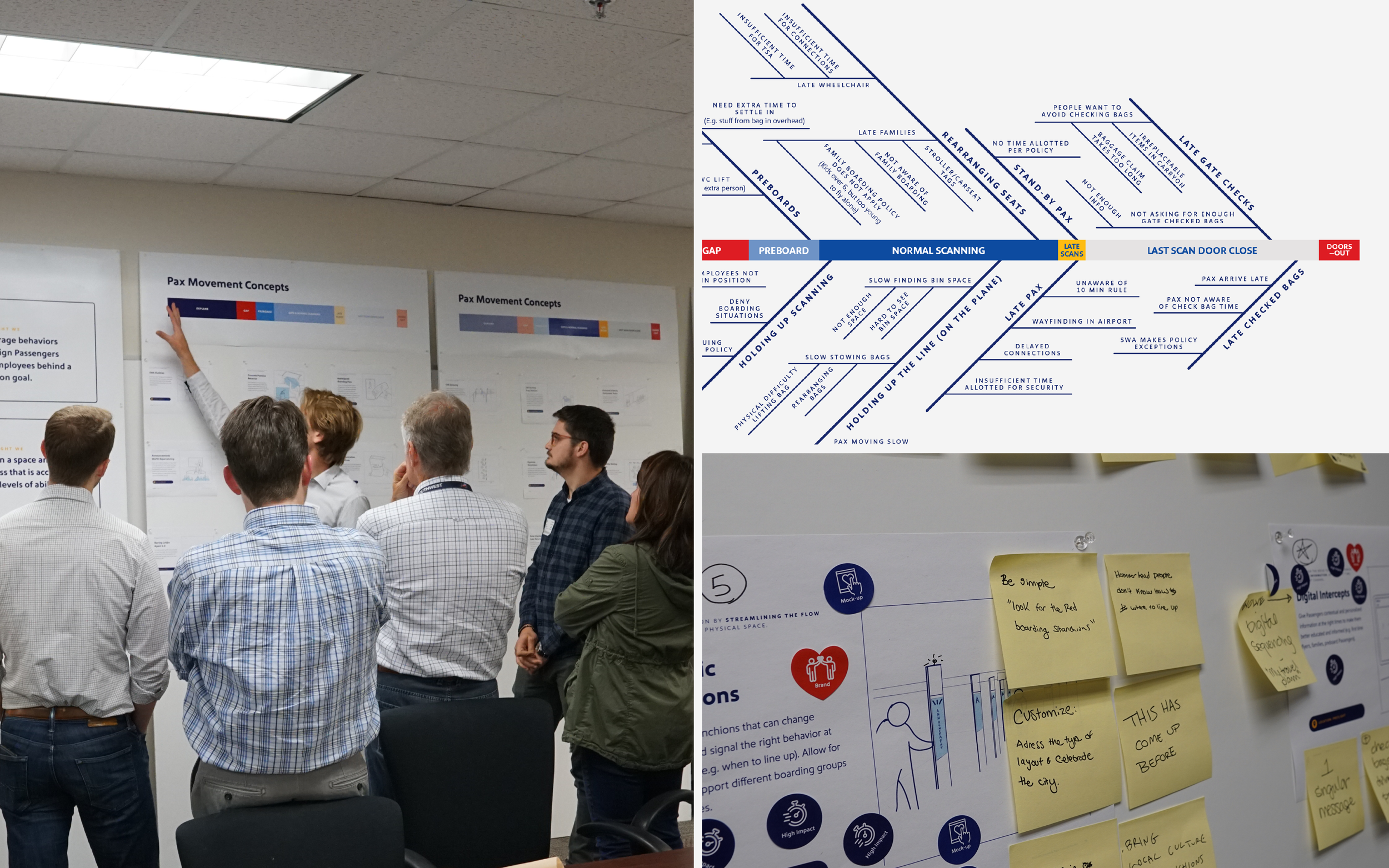
Southwest’s quantitative analysis identified where we could find potential time savings. We conducted qualitative research with Employees and Customers to understand why movement is slow and identify how to speed it up via root cause analysis, sacrificial concepts, and service blueprinting.
We down-selected concepts based on operational considerations, brand voice, and those most likely to result in better time-to-service.
Example Service Components
-
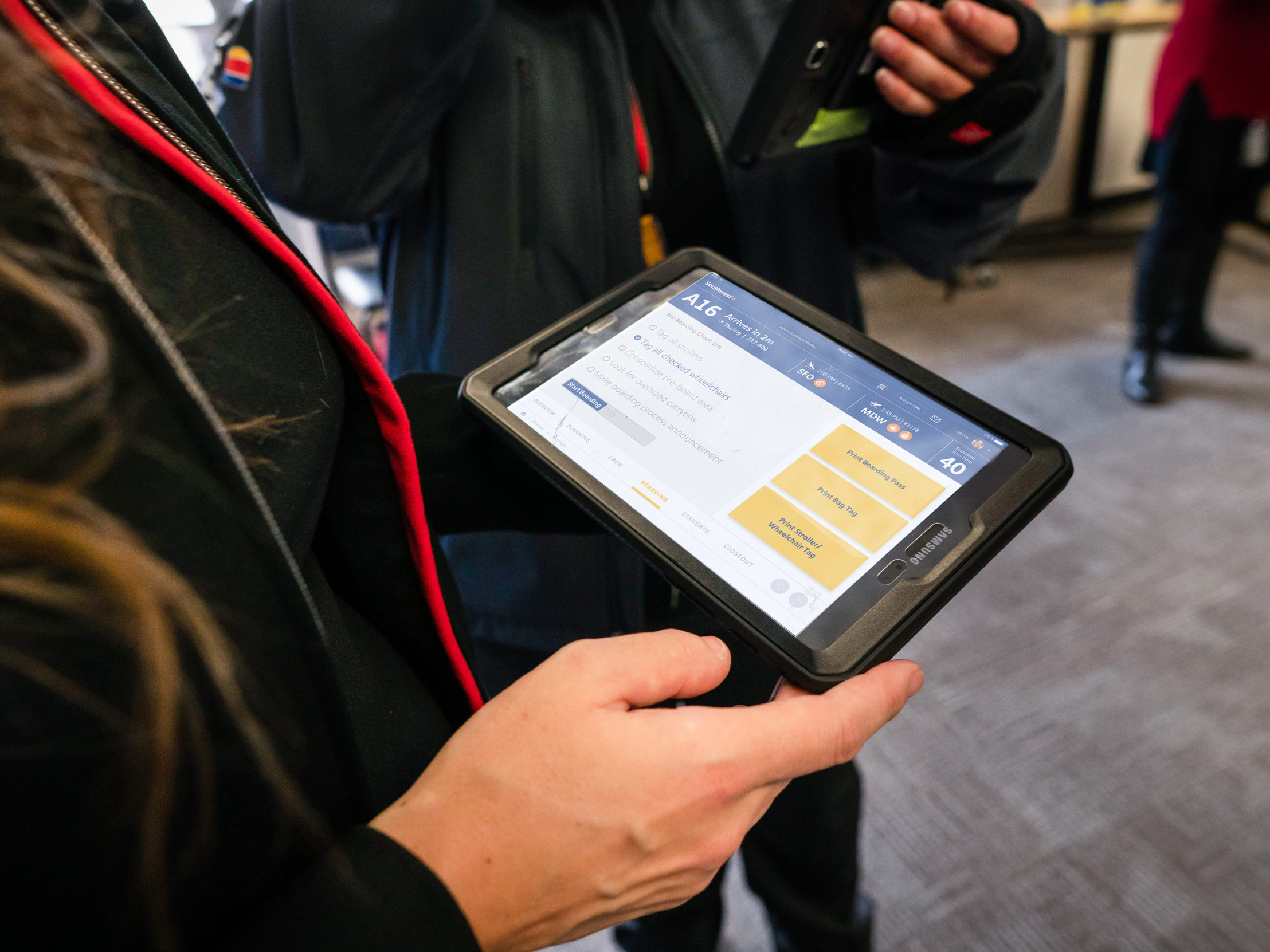
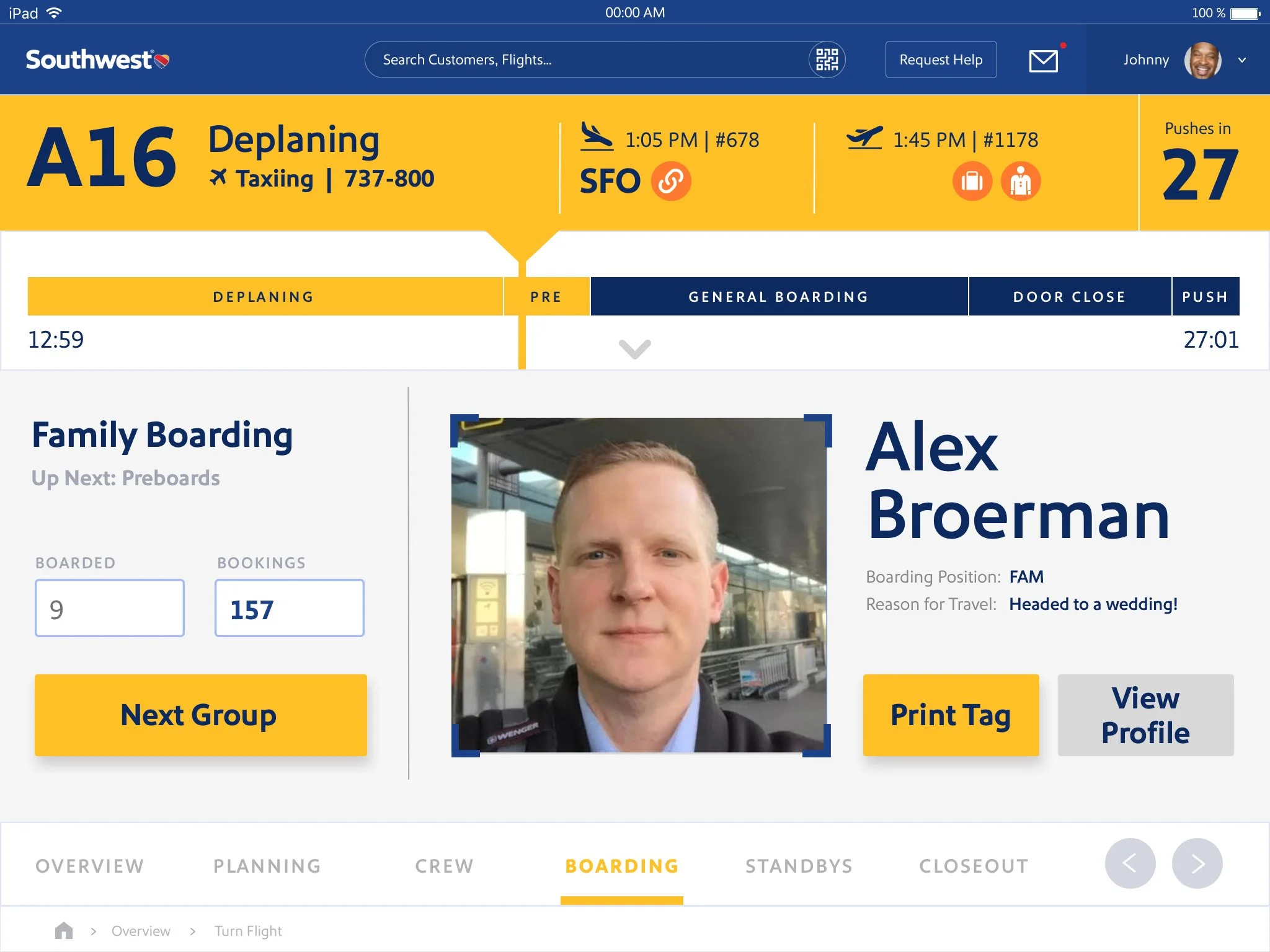
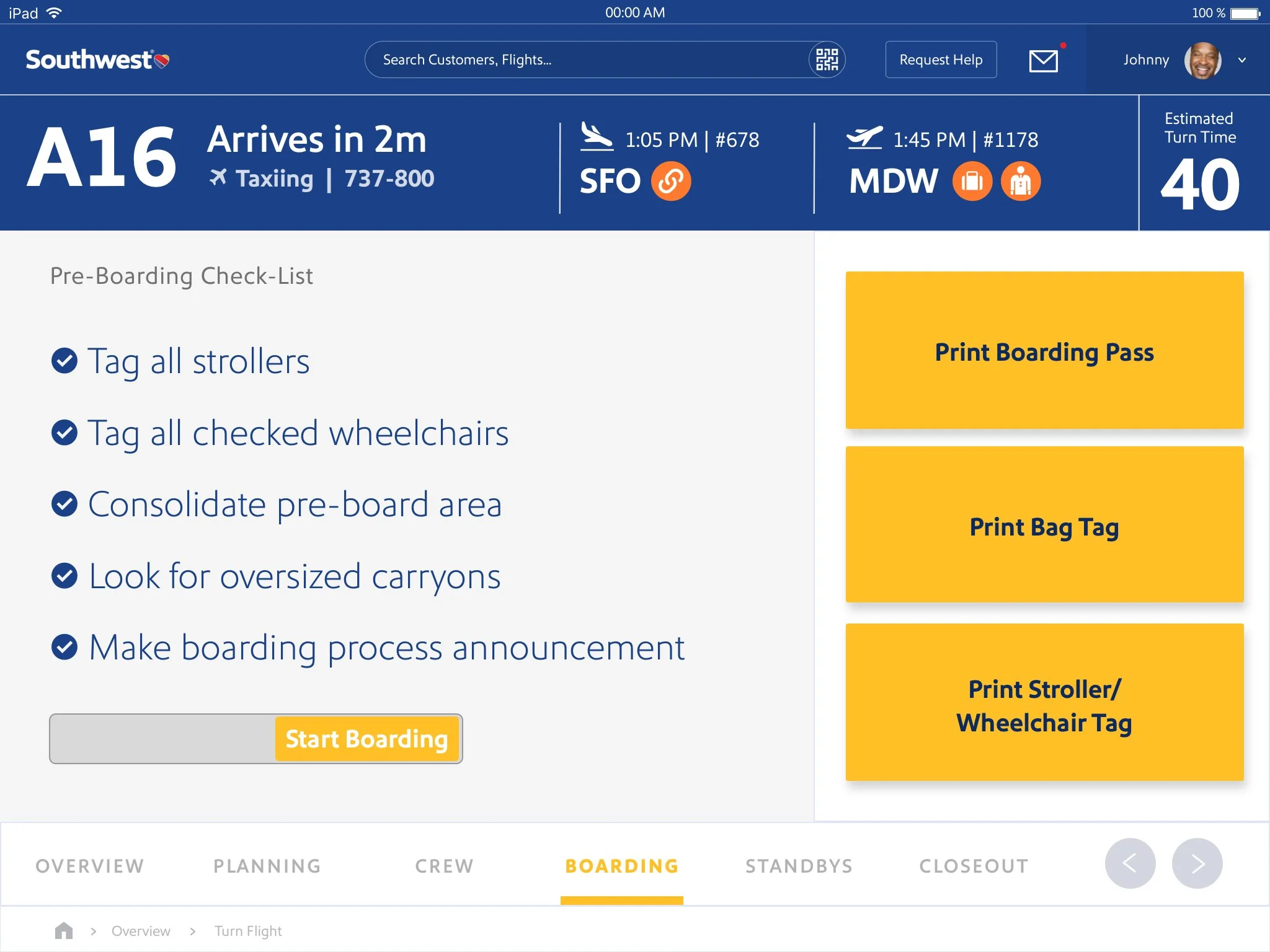
Mobile Ops Workflows
Mobile Ops Workflow
Location: Gate Area
End User: Employee
Type: Digital Tool -
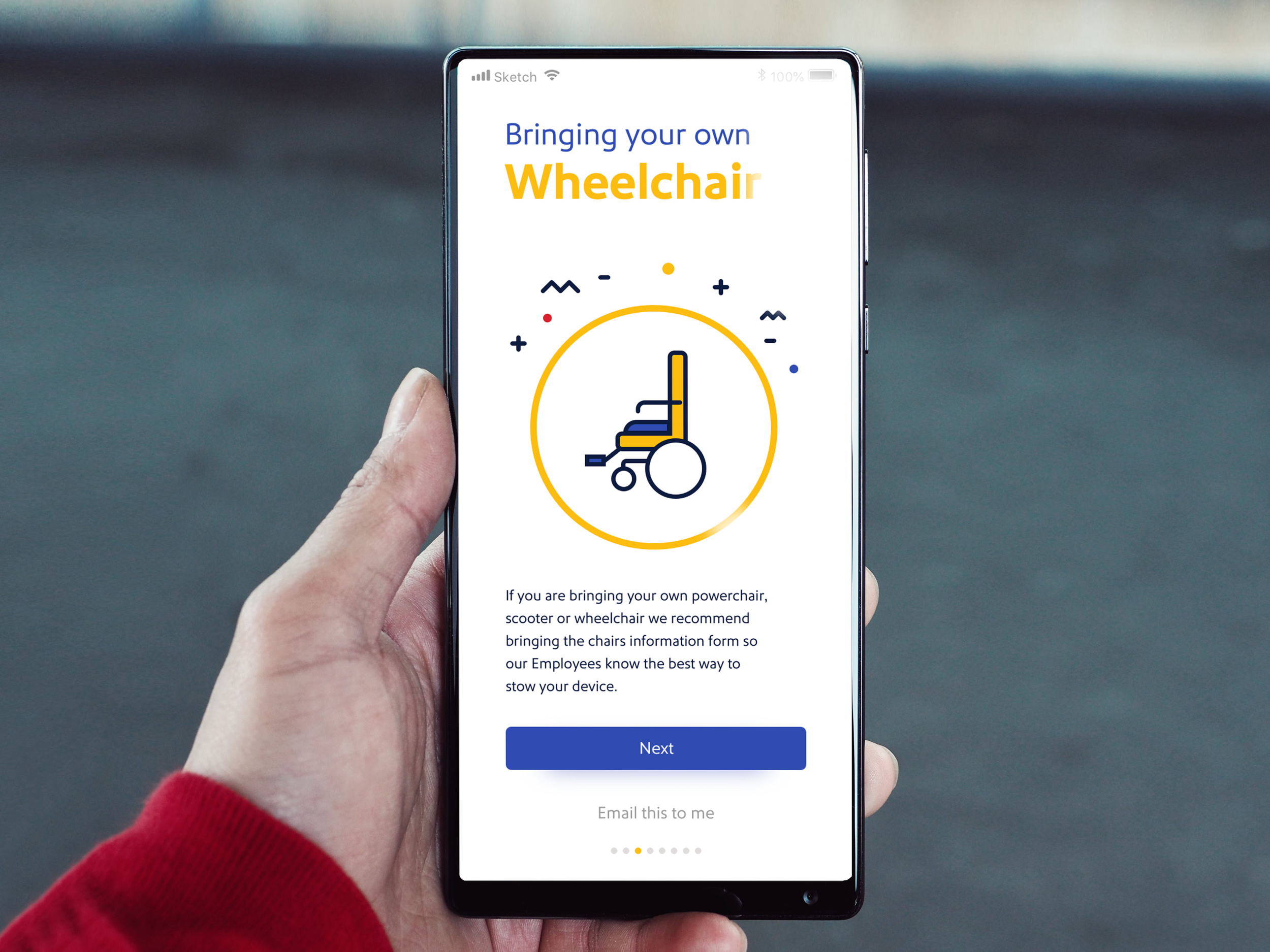
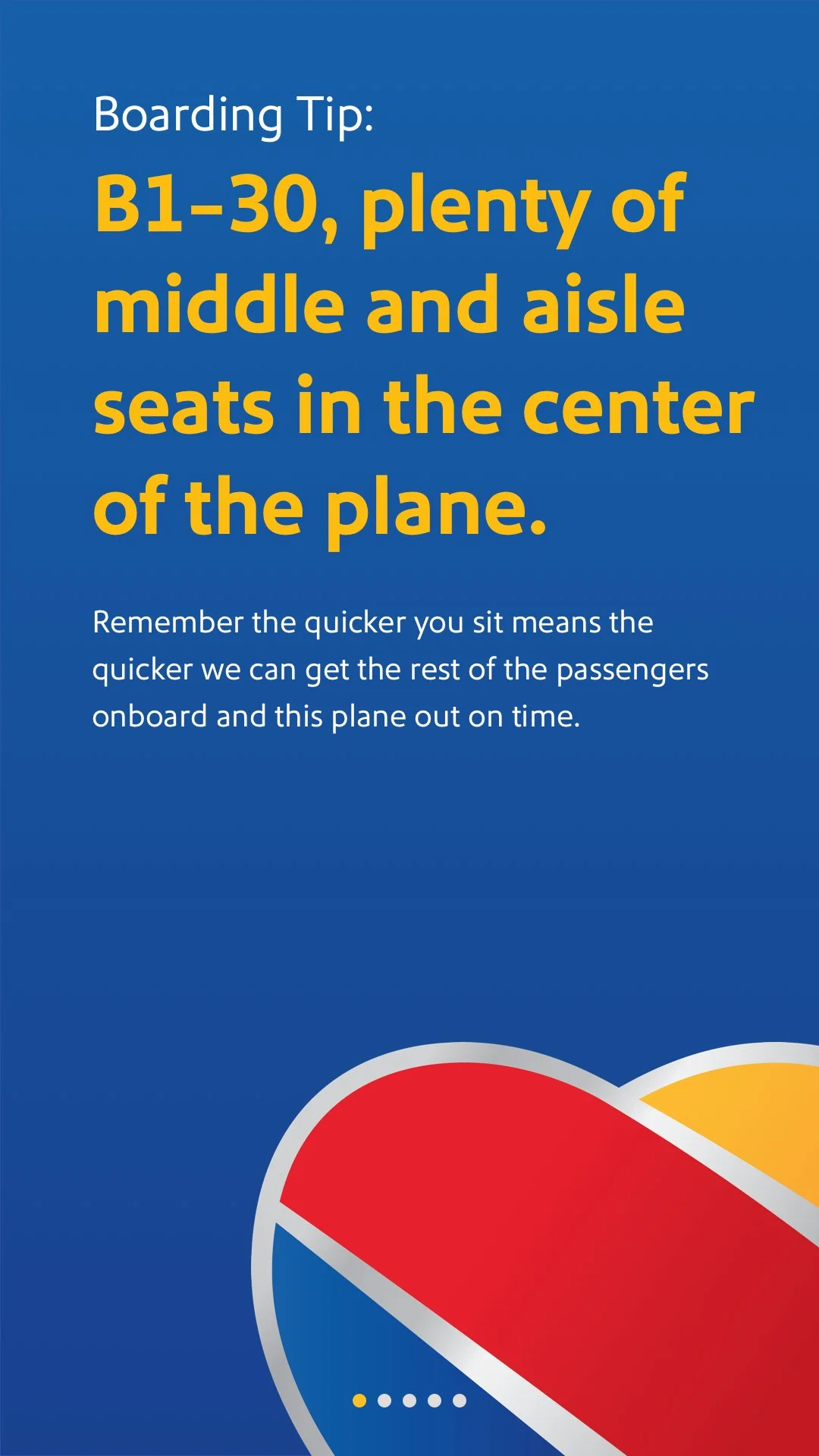
Digital Intercepts
Location: Pre-Lobby
End User: Customer
Type: Digital Tool -
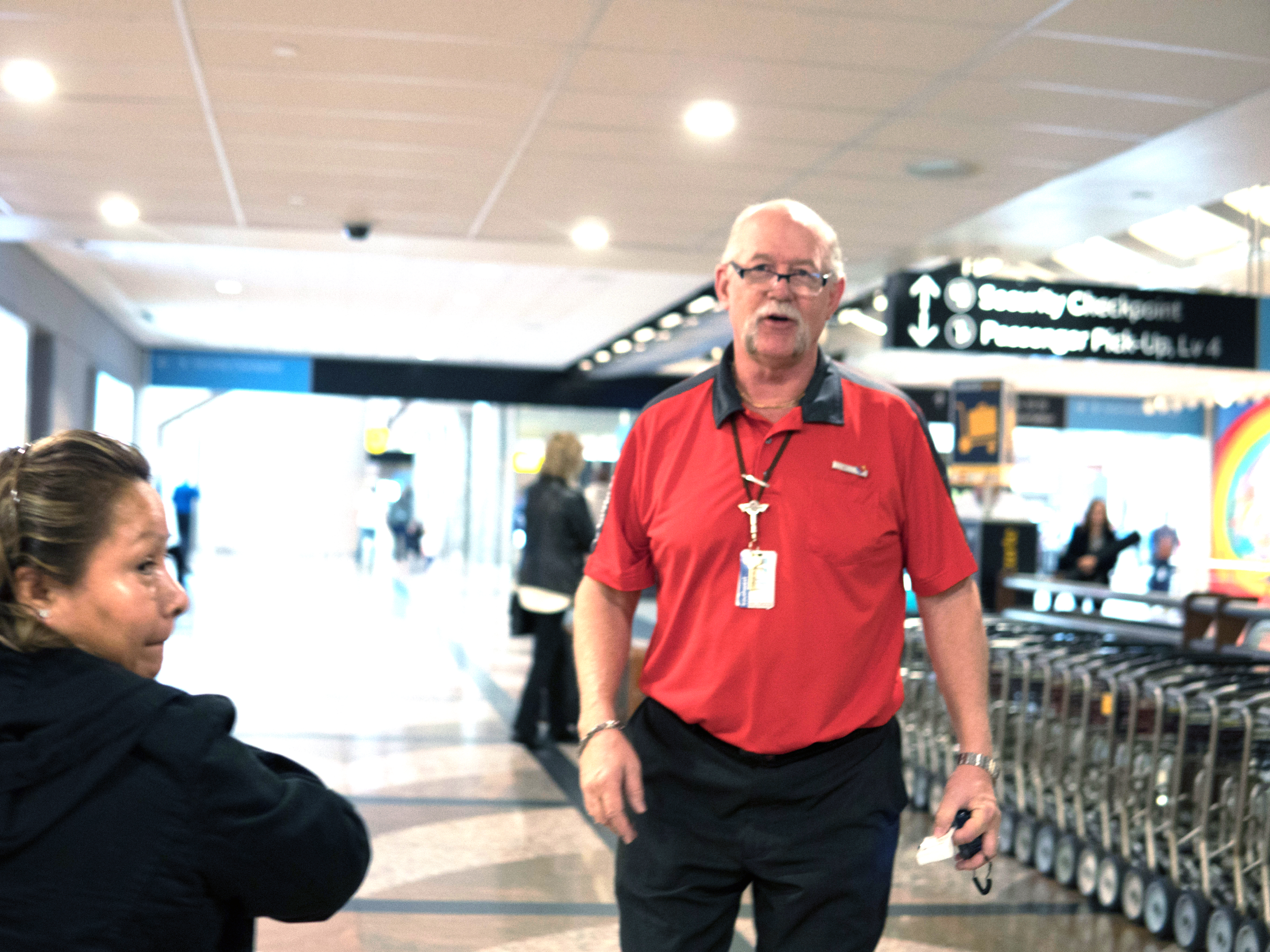
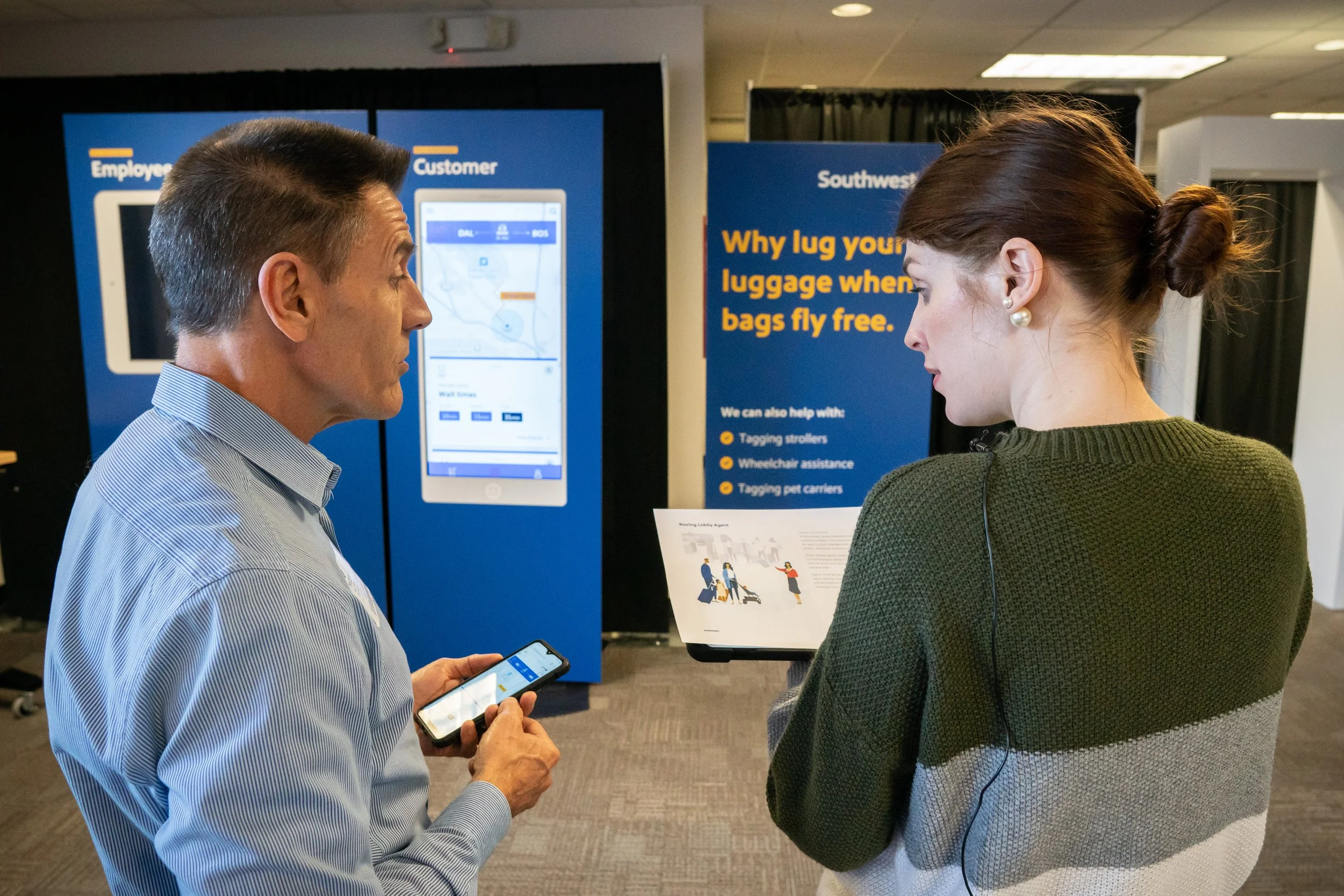
Roving Agent
Location: Lobby Area
End User: Customer
Type: Hospitality -
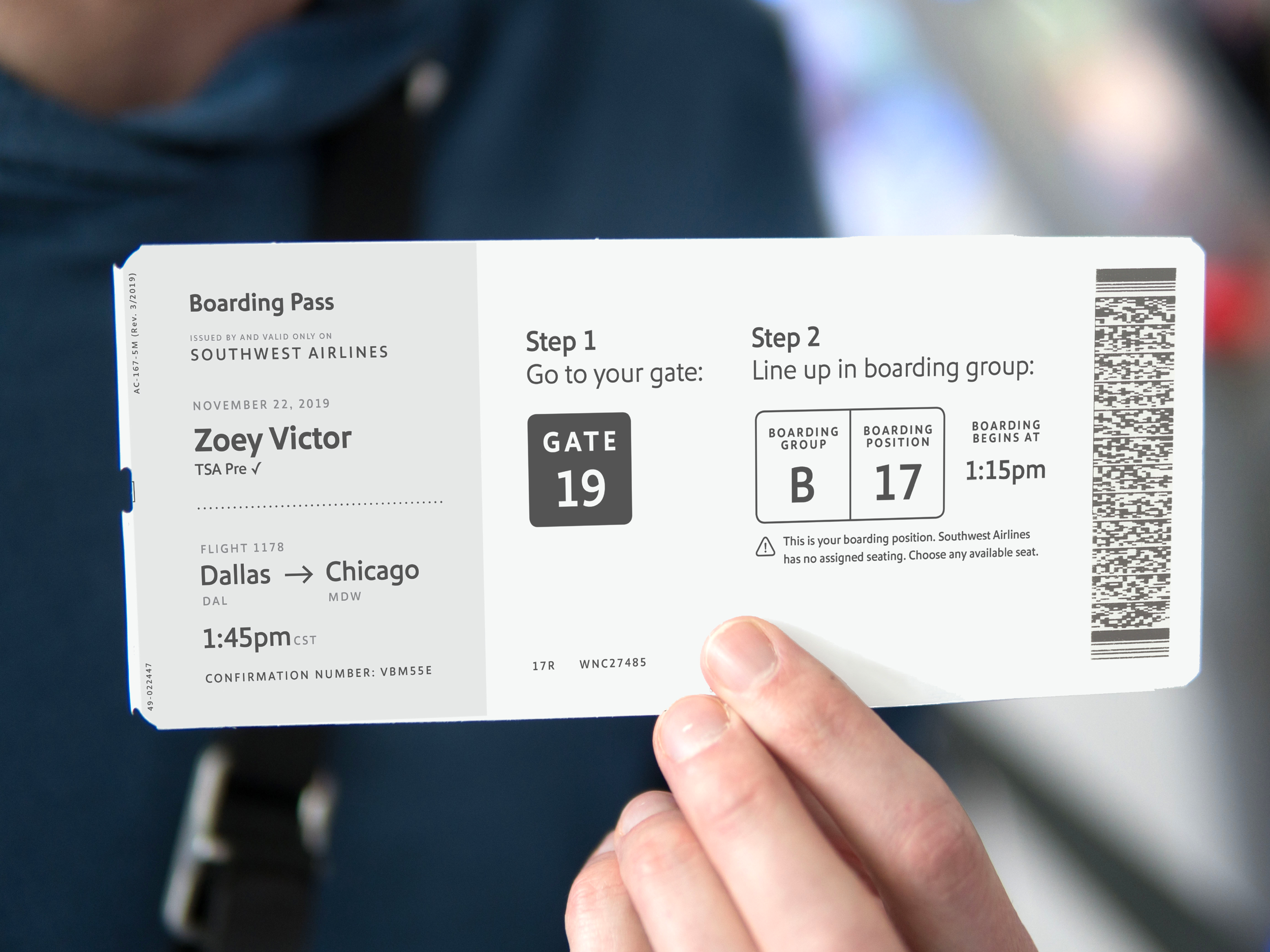
Clear Boarding Pass
Location: Gate Area
End User: Customer
Type: Physical -
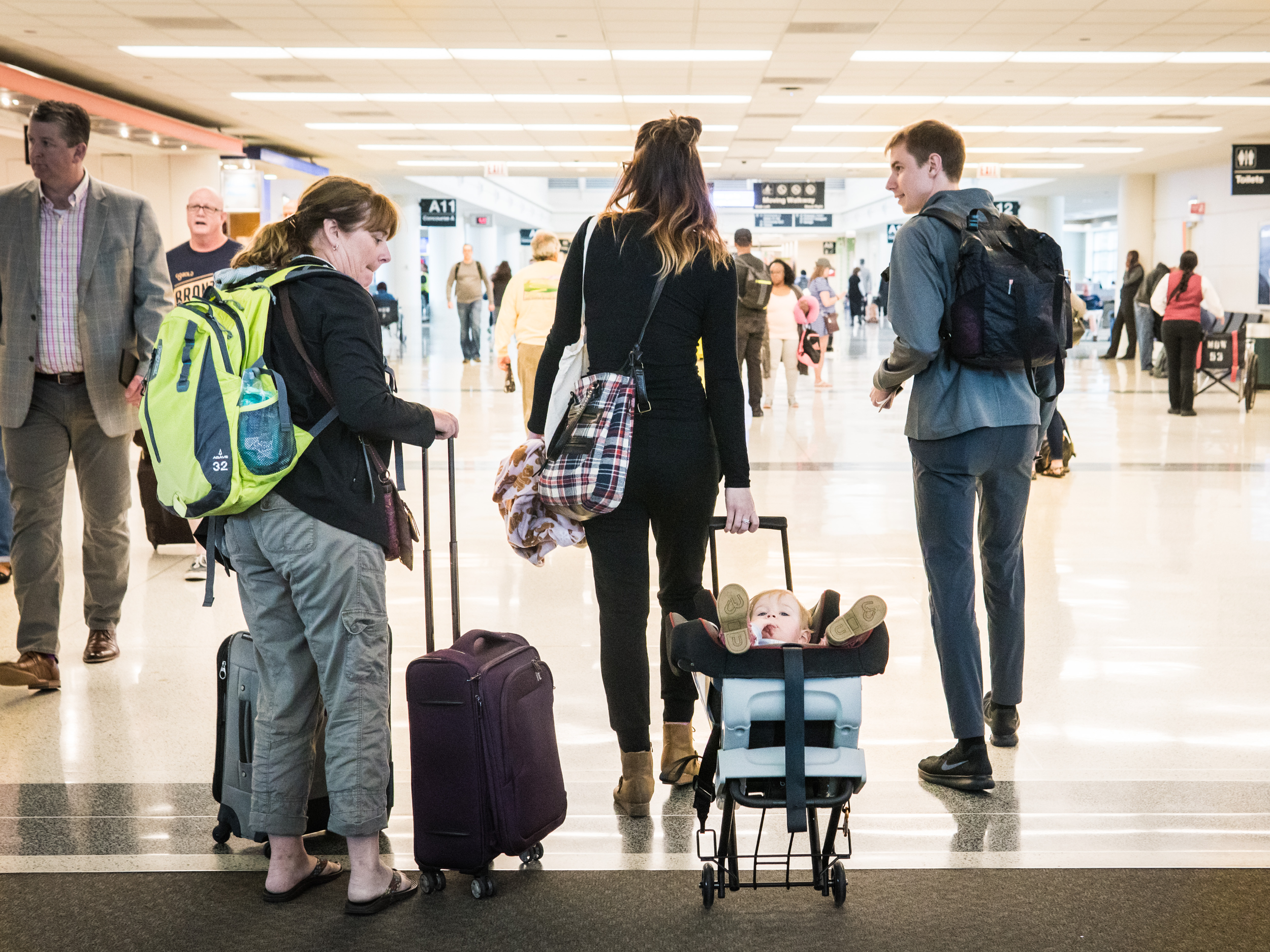
SWA Buddies
Location: Lobby Area
End User: Customer
Type: Hospitality -
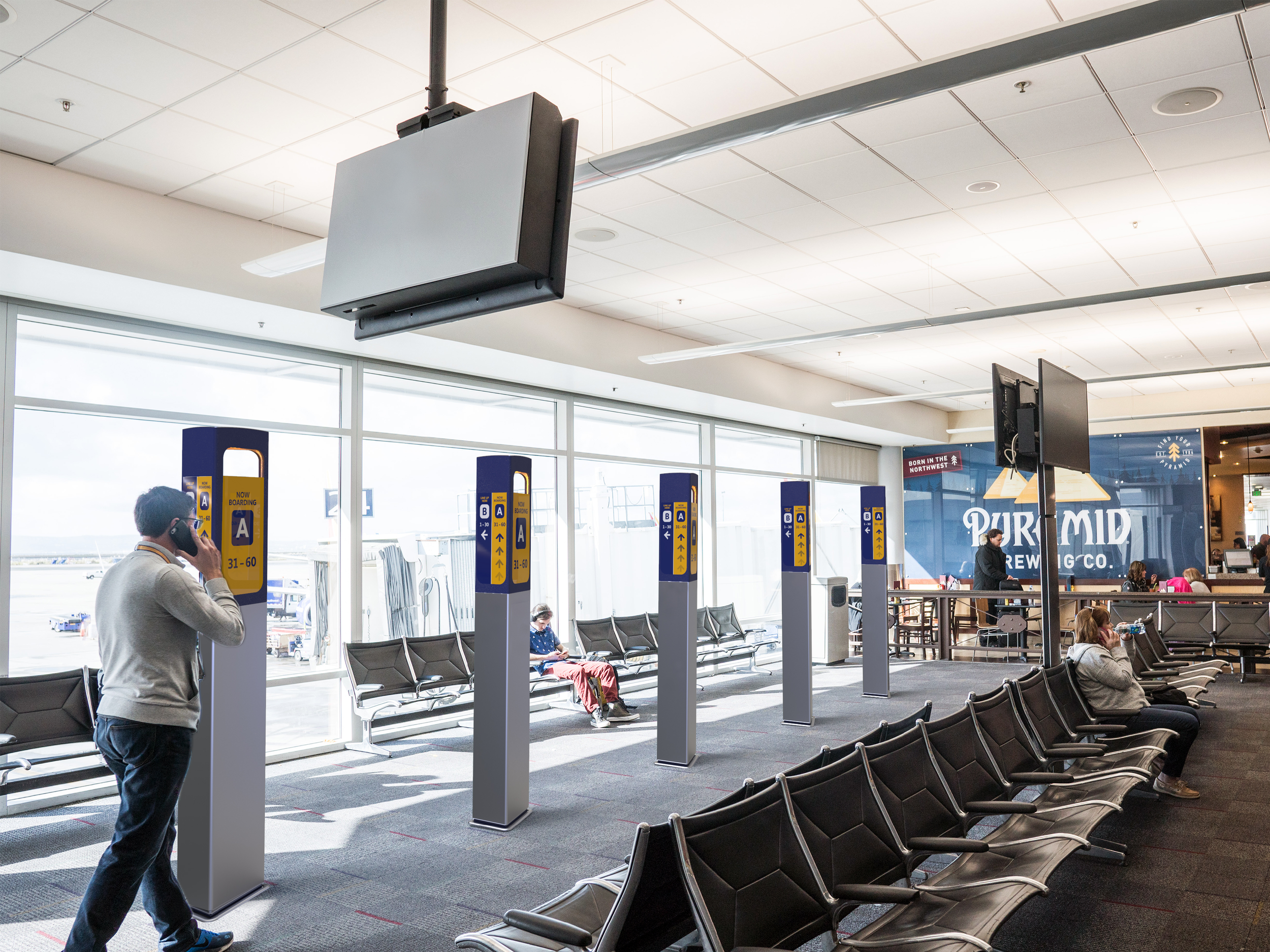
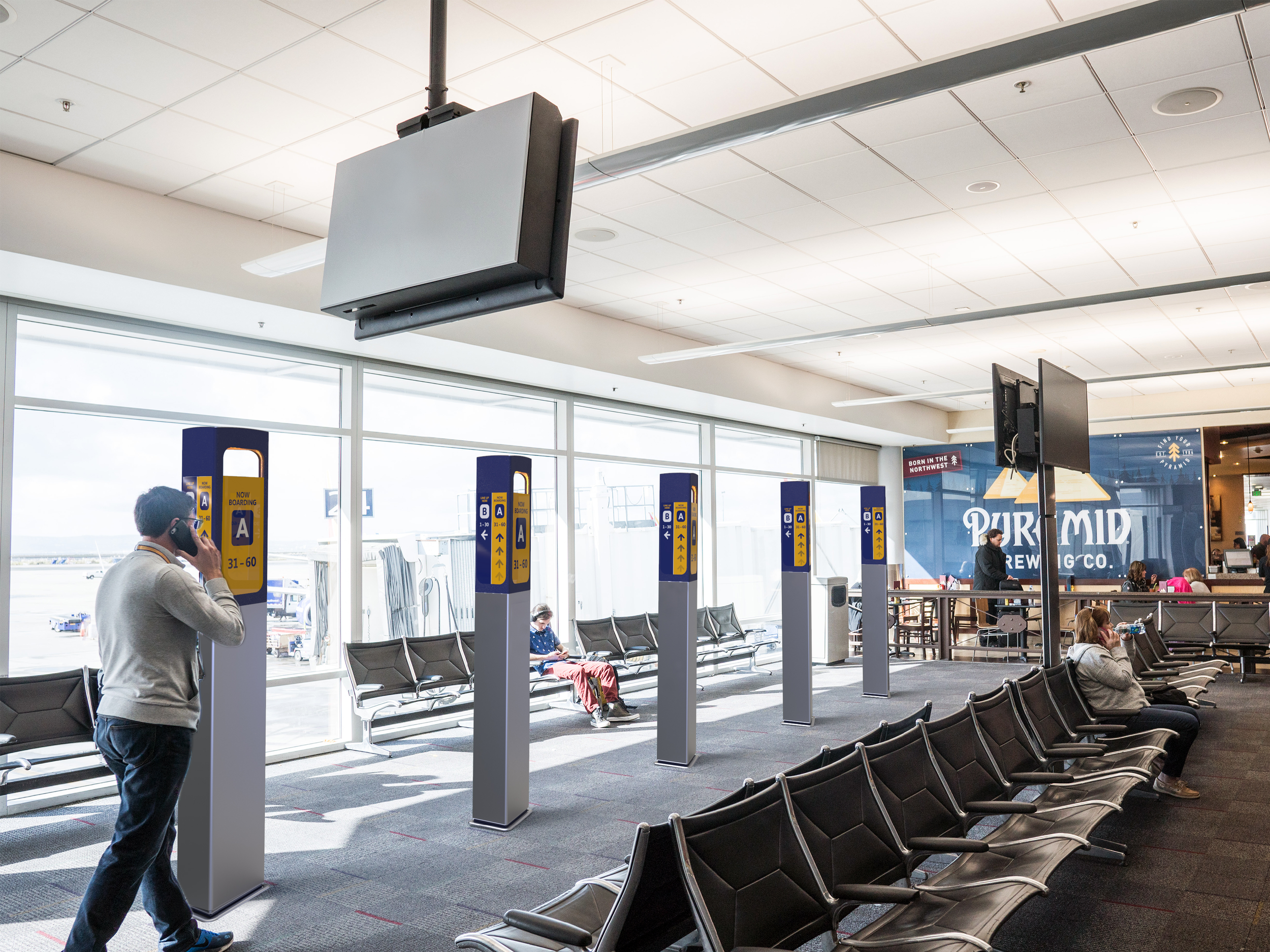
Dynamic Stanchions
Location: Gate Area
End User: Customer
Type: Physical/Digital
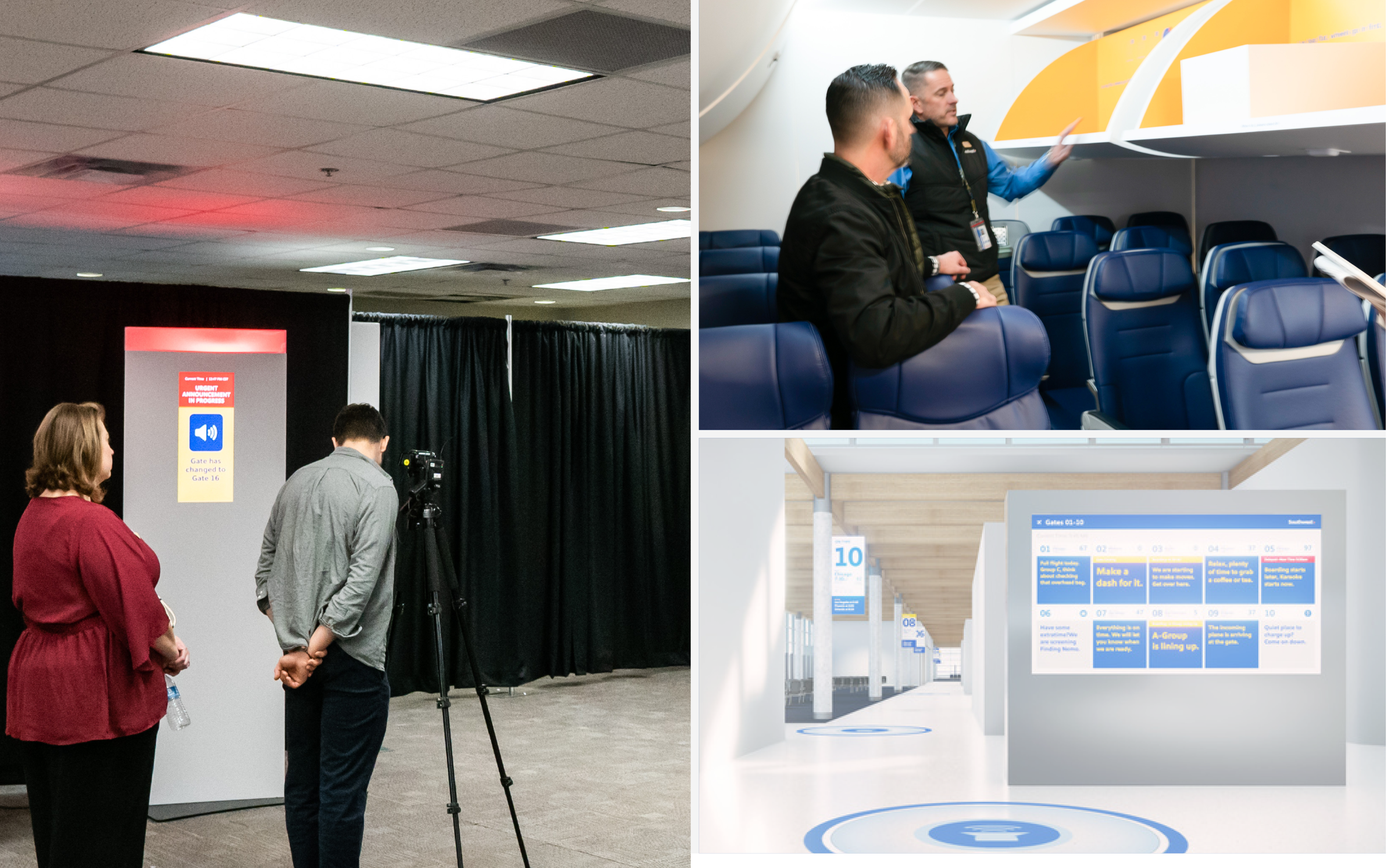
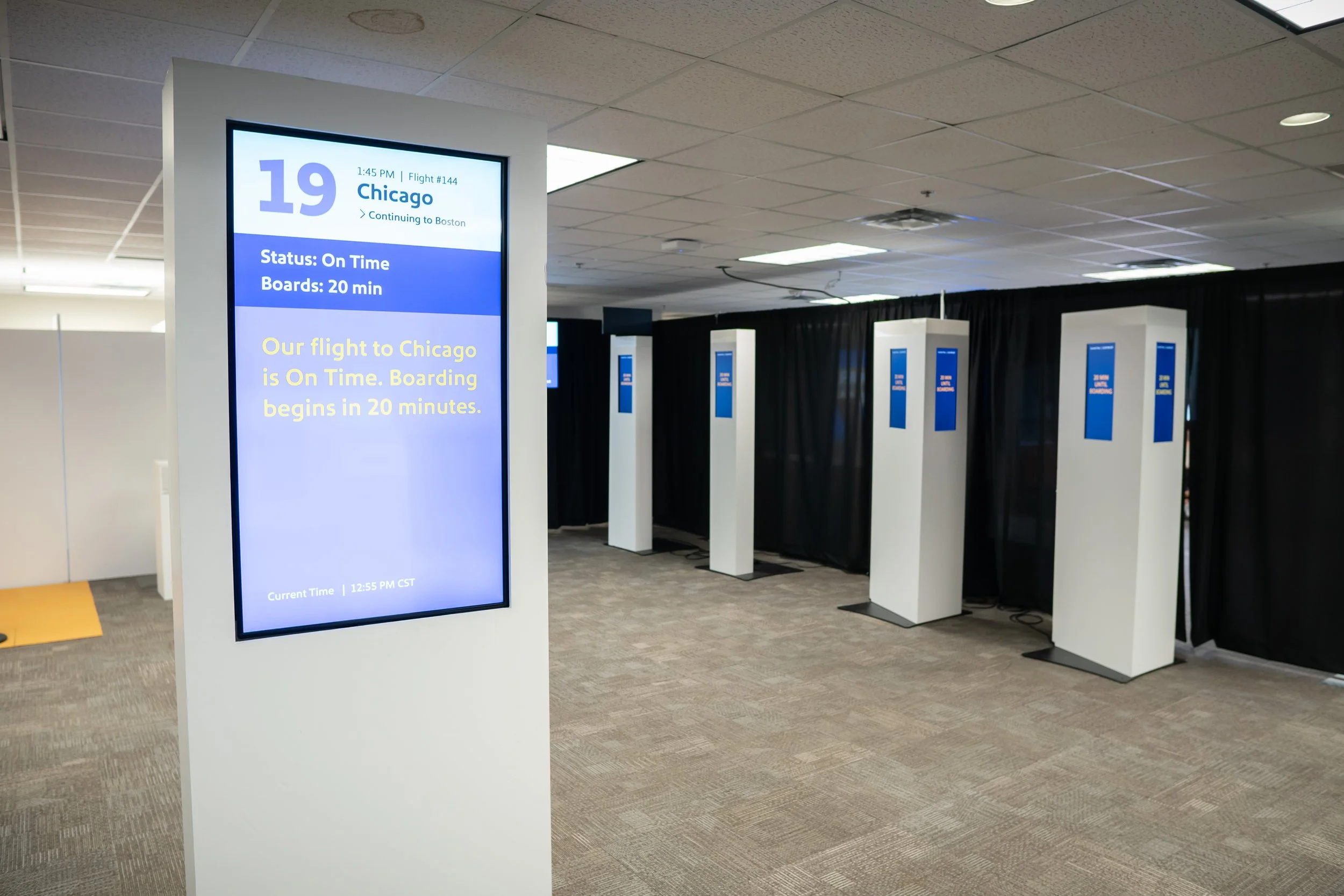
Most prototypes ask customers to imagine. We wanted customers to experience the future state for themselves.
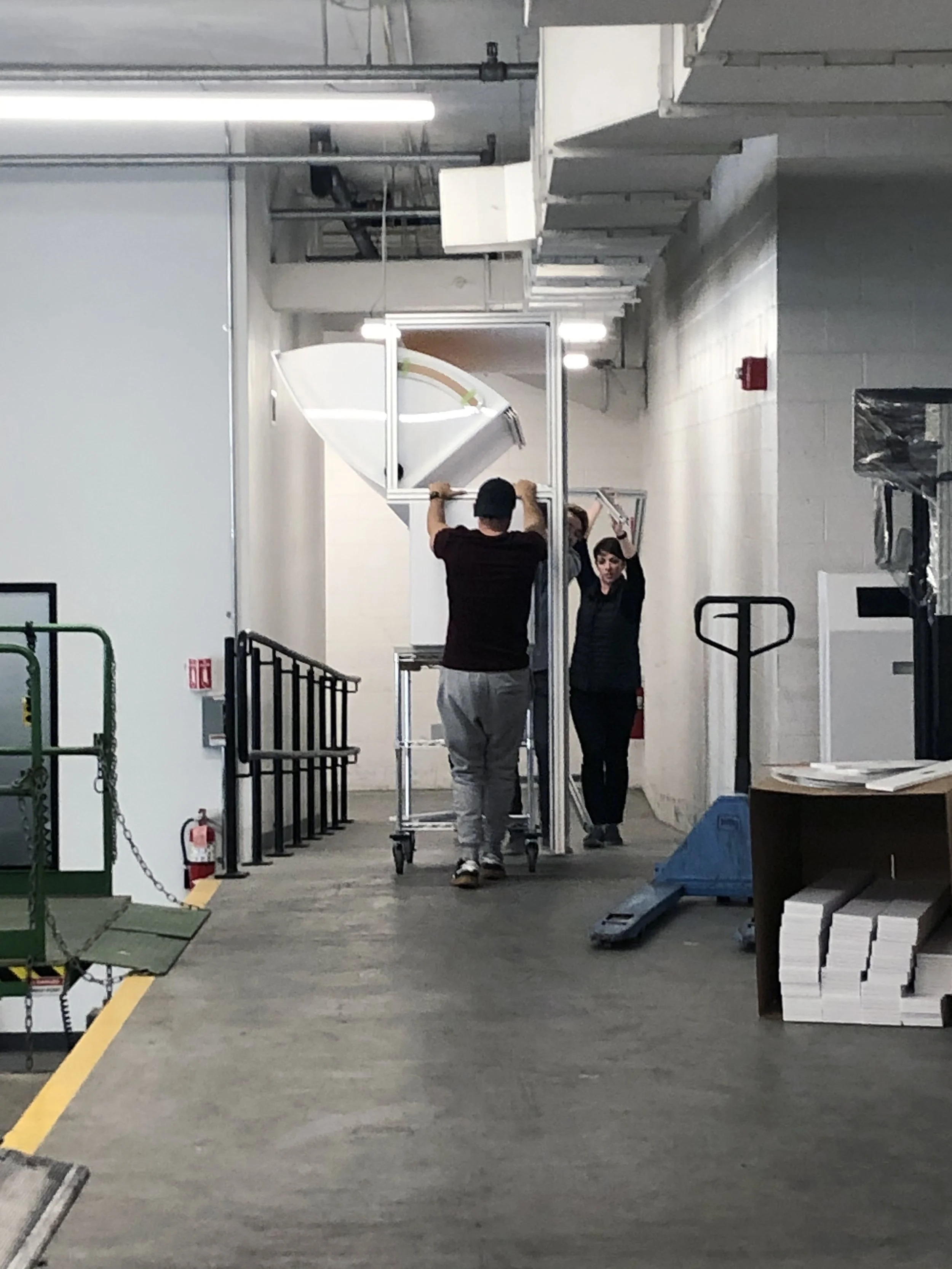
Working with a creative technologist, we built a trigger-based environment where an operator could shift gate states, boarding sequences, and live announcements from an iPad, letting customers experience the entire future-state service end to end, exactly as it would feel in the real world.
“Wizard of OZ” - Future State Interactive Service Prototype
The Outcome
Release at Major Hubs
Functional Service Design prototype deployed at Denver and Dallas Lovefield Airports.
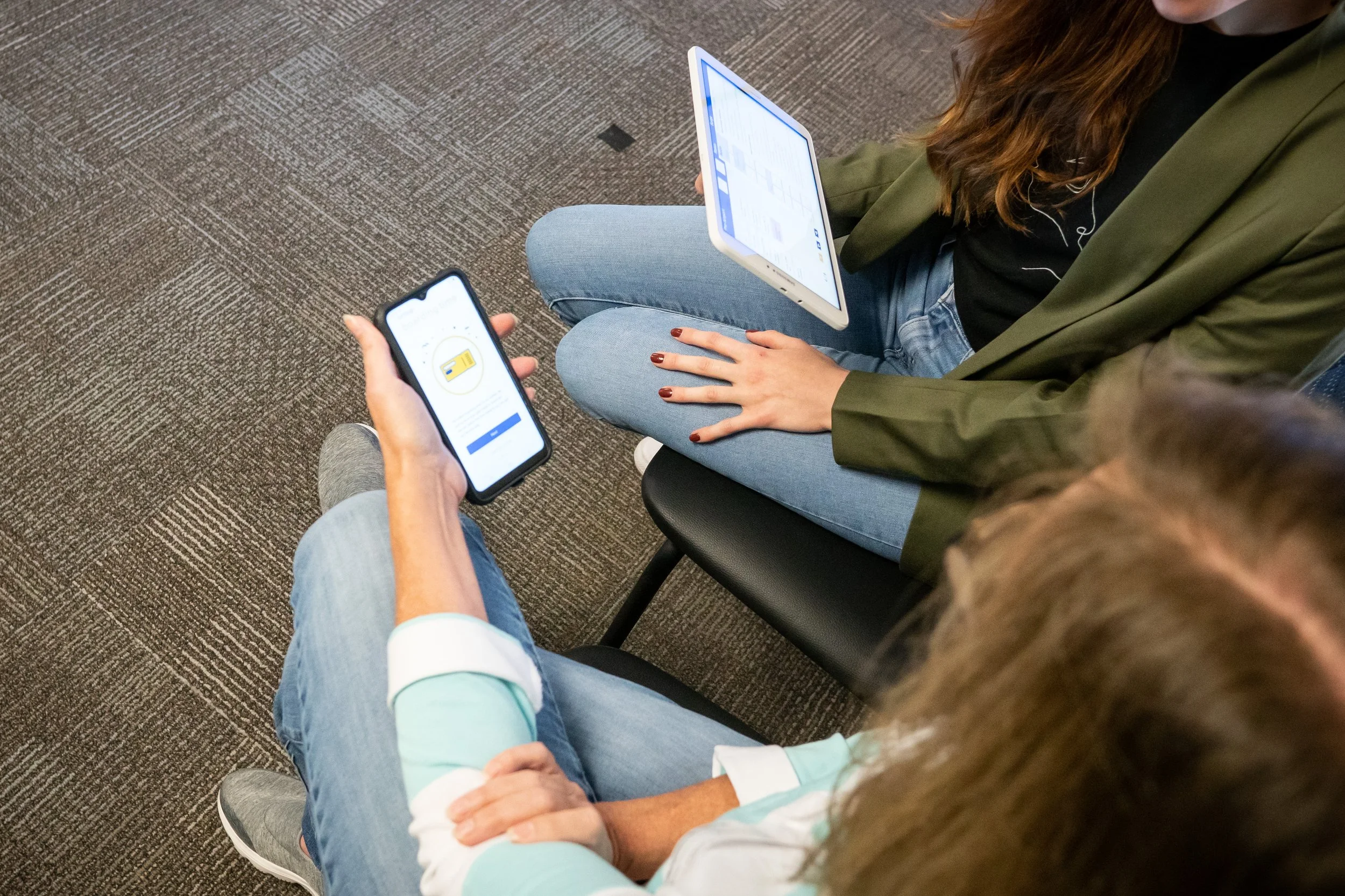
Pilot Study with real passengers during real flights incorporated into core business strategy.